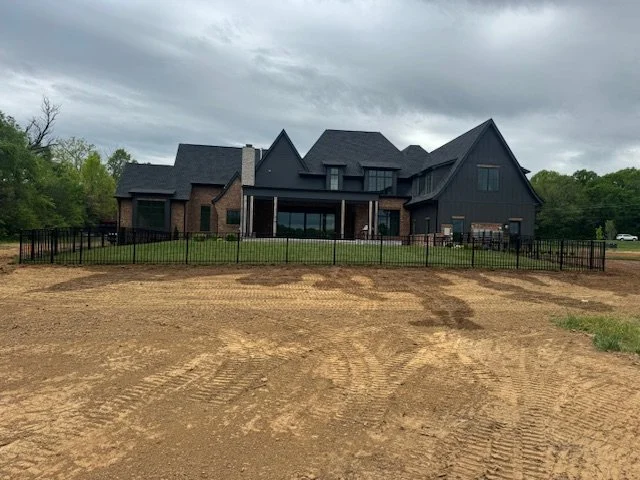
Approved style aluminum fence in a Middle Tennessee subdivision

HOA & Permit Rules for Fences in Williamson and Rutherford County

Approval first, materials second.

In most of the neighborhoods we work in, the fence you can build is decided before you ever pick a material. Getting approval sequenced correctly saves weeks, and it saves the specific pain of taking down a fence that was built to the wrong specification.

Two separate approvals, not one

Your HOA architectural review committee and your local permitting office are unrelated processes with different rules. Passing one does not satisfy the other, and they can be at odds, with an association style that exceeds a municipal height limit or vice versa.

Start with the HOA, because their approved material list is usually the narrower constraint, then confirm the jurisdiction requirements for height, placement and corner lot visibility.

  • HOA: material, color, height, style, sometimes placement
  • City or county: height by yard location, setbacks, sight triangles
  • Pool barriers: separate safety requirements enforced at inspection
  • Easements: utility and drainage easements affect where posts can go

What Williamson County neighborhoods typically require

Franklin, Brentwood, Nolensville and Spring Hill neighborhoods commonly specify black aluminum picket or a defined wood profile, restrict front yard fencing heavily, and require the finished side of a wood fence to face outward.

Historic overlay properties near downtown Franklin add design review with its own standards. Plan for a longer timeline on those.

What Rutherford County neighborhoods typically require

Murfreesboro and Smyrna subdivisions tend to be more permissive on material, with vinyl and wood privacy widely approved alongside aluminum, though color and height are still specified. Whether city or county rules apply depends on your exact address, since a lot of growth here sits just outside city limits.

The submission that gets approved quickly

Committees approve what they can picture. A submission with a plat showing the proposed fence line, the exact material and color, the height, gate locations and a product photo moves far faster than a written description.

We give you those specification details for your packet and build exactly to what gets approved.

What an architectural submission usually needs

Committees vary, but the request is nearly always the same set of items: a plat or survey with the proposed fence line drawn on it, the material and style, the height, the color or finish, and sometimes a product photo or manufacturer specification sheet.

The submissions that get delayed are the vague ones. Writing wood fence on a form invites questions. Writing six foot board on board pressure treated pine, three rail, dog eared top, unfinished, set on the interior lot lines as shown answers them before they are asked.

  • Survey or plat with the fence line marked
  • Material, style, height and finish stated specifically
  • Product or style photo where the committee asks for one
  • Gate locations and widths noted on the drawing

Approval timelines and sequence

Review committees often meet on a set schedule rather than continuously, so a submission that misses a meeting can wait weeks for the next one. Building before approval is the expensive mistake, because the remedy an association can require is removal.

We sequence around it. You submit, we hold the material order, and once you have written approval we schedule the build to exactly what was approved. If your committee changes something, that change happens on paper rather than in the ground.

Common questions

Answers before you ask.

Do I need a permit for a residential fence?

It depends on your jurisdiction and the fence height and location. Requirements differ between Franklin, Brentwood, Nolensville, Murfreesboro, Smyrna and the unincorporated county areas, so confirm for your specific address.

How long does HOA approval take?

It varies by committee, from days to several weeks depending on their meeting schedule. Submitting a complete packet the first time is the biggest factor you control.

Can I build right on the property line?

Sometimes, and sometimes a setback is required. Easements can also prohibit permanent structures. We locate your pins and flag any conflict before building.

What if my HOA denies the design?

Most denials are about a detail rather than the whole project, usually height, color or material. We adjust the specification to what the committee will approve and resubmit.

Get an estimate

Ready to talk through your project?

Send the property address, what you are looking to build and a few photos of the area. We will follow up to schedule a site visit and put together a clear, detailed quote.