
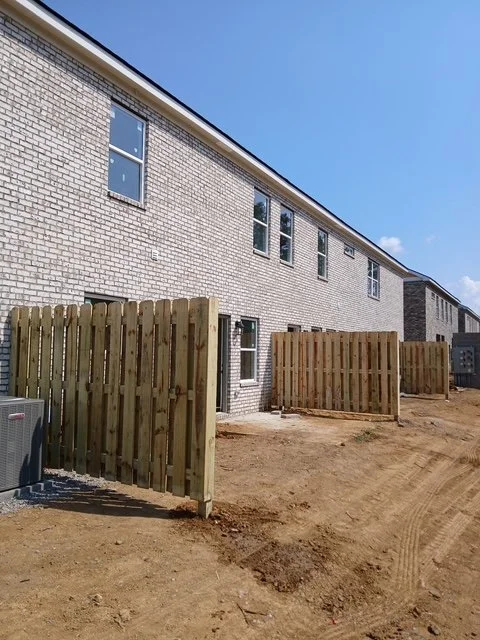
Wood privacy fence with a matching swing gate installed beside a brick home

Gate & Automatic Gate Installation in Middle Tennessee

The part of the fence you touch every single day.

Gates are where fences fail. They carry all the moving weight, they get used daily, and they are the first thing to sag when posts, hinges or bracing are undersized. We build gates as part of the fence line, not as an afterthought bolted on at the end.

Types

Walk, double drive, automatic

Materials

Aluminum, vinyl, wood, steel frame

Automation

Swing and slide operators

Detail

Reinforced posts and bracing

Walk gates and double drive gates

Every gate opening gets posts sized for the leaf weight, set deeper than line posts and set in concrete. Wood gates get diagonal bracing, vinyl and aluminum gates get reinforced frames, and hardware is chosen for the actual load rather than what came in the panel kit.

We also think about where the gate should be. Mower access, trash cans, trailer clearance and the path from the driveway to the back yard all influence placement, and it is much cheaper to get that right during layout.

  • Reinforced, deeper set gate posts
  • Braced frames that stay square
  • Self closing and self latching hardware for pool barriers
  • Openings sized for mowers, trailers and equipment

Automatic driveway gates

An automatic entry gate is a construction project as much as a fence project. It needs a power source, a conduit path, an operator matched to the gate weight and swing arc, safety devices, and an entry method such as a keypad, remote or app control.

Because we plan it before the driveway and landscaping are finished, the trenching, gate post footings and operator pad go in without tearing up work that is already done.

Matching the gate to the fence

A gate should read as part of the run, with the same picket profile, height and top line. On board on board and horizontal fences we carry the pattern across the gate so the opening is barely visible when it is closed.

Plan gates before posts go in the ground

Gate placement is the decision homeowners most often want to change after the fact, and it is the one that is hardest to change. Moving a gate means pulling and resetting posts, and on a concreted post that is real work.

Think about how the yard is actually used. A mower needs a wider opening than a person does. Trash cans have a route. Trailers, mulch deliveries and pool equipment all need a way in. A single four foot gate on the wrong side of the house turns every yard task into a longer one.

Common questions

Answers before you ask.

How wide should a driveway gate be?

Most residential driveway openings work at twelve to sixteen feet total, often split into two leaves. The right width depends on your driveway, the approach angle and whether trailers or equipment need to pass through.

Do automatic gates need power run to them?

Yes. Most reliable setups use a dedicated power run with conduit to the operator, planned during layout. Solar options exist but need to be matched carefully to gate weight and daily cycle count.

Why do gates sag?

Almost always undersized posts, missing bracing or hardware rated below the leaf weight. All three are avoidable at install.

How wide should a gate be?

A walk gate is typically three to four feet, and anything a mower or equipment passes through wants to be wider. We size openings around what you actually move through them.

Get an estimate

Ready to talk through your project?

Send the property address, what you are looking to build and a few photos of the area. We will follow up to schedule a site visit and put together a clear, detailed quote.