
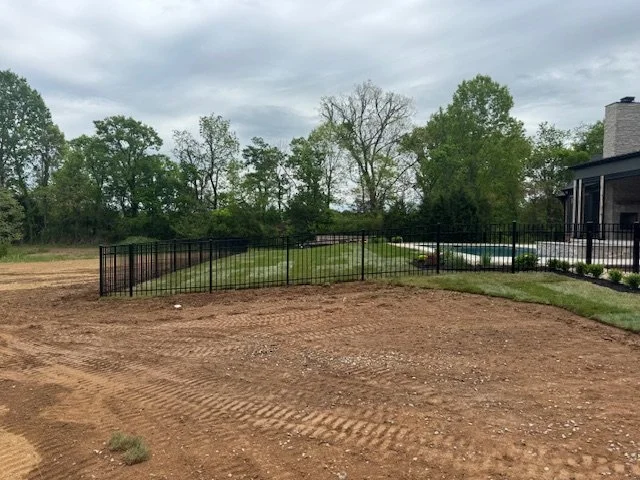
Fence line following the grade of a Middle Tennessee yard

Fence Cost Guide for Middle Tennessee

What actually moves the number on a fence quote.

Anyone quoting a fence over the phone is guessing. Two identical houses on the same street can price differently because of rock, grade, access and gate count. Here is what a real quote is built from, so you can read the ones you receive.

The six factors that set the price

Material is the headline number, but it is rarely what separates two quotes on the same yard. The other five factors below usually explain the gap, and they are the ones a contractor can quietly leave out to look cheaper.

  • Material: wood and chain link at the low end, vinyl and aluminum higher
  • Linear footage: the single biggest multiplier
  • Height: a six foot fence uses more material and deeper posts than a four foot
  • Gates: each opening adds posts, hardware and labor, automatic gates far more
  • Site conditions: rock, slope, wet ground and tree roots all add time
  • Access: a yard reachable by equipment installs faster than a hand carry job

Why rock matters so much here

Shallow limestone across Williamson County and parts of Wilson County means post holes that should take minutes can take substantially longer, with different equipment. Clay heavy ground in Rutherford County digs easily but demands correct depth and backfill so seasonal swelling does not lift posts.

A quote that does not mention site conditions at all was probably built from a satellite image, and the difference tends to appear later as a change order.

Where the cheap quote saves money

Low quotes are not always dishonest, but the savings come from somewhere. The usual places are shallower posts, wider post spacing, two rails instead of three on a six foot wood fence, lighter gauge material, and gate hardware rated below the leaf weight.

None of those show up on install day. All of them show up in year three, which is when a leaning fence and a dragging gate stop being a bargain.

  • Ask what depth posts are set to and whether concrete is used
  • Ask the post spacing and rail count
  • Ask what gate hardware is rated for
  • Ask whether removal and disposal of the old fence is included

How to get an accurate number

Measure your rough perimeter, decide how many gates you need and where, note any slope or known rock, and take a few photos of the yard from opposite corners. That is enough for a productive first conversation.

From there, a site visit settles the real variables. We walk the property, take measurements, talk through materials against your budget, then quote what we are actually building.

Common questions

Answers before you ask.

Is fencing priced per linear foot?

Material is generally thought of per foot, but the total quote includes gates, site conditions, removal and access, which is why per foot averages found online rarely match a real yard.

Which fence is cheapest?

Chain link, then wood privacy in pressure treated pine. Vinyl and aluminum cost more up front and ask for far less maintenance over the following decade.

Does a bigger yard cost less per foot?

Often slightly, since mobilization and setup are spread over more footage, as long as the run is not broken up by lots of corners, gates and obstacles.

Get an estimate

Ready to talk through your project?

Send the property address, what you are looking to build and a few photos of the area. We will follow up to schedule a site visit and put together a clear, detailed quote.