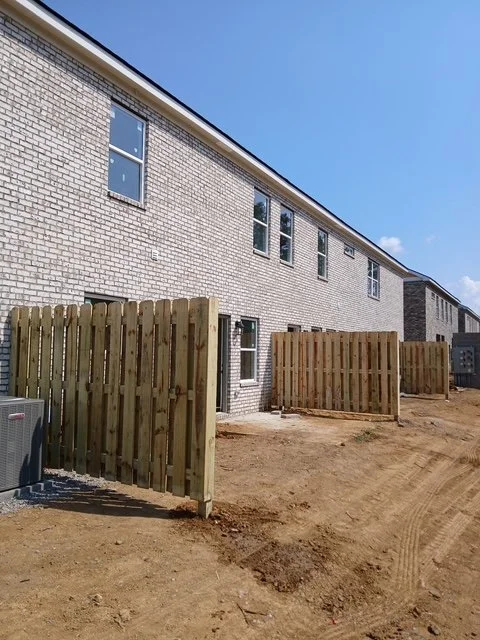
Wood fence line built beside a Middle Tennessee home

Horizontal Wood Fence Installation in Nashville & Middle Tennessee

Modern lines for homes that were not built in 1994.

Horizontal fencing turns a property line into an architectural element. It suits modern infill homes, black and white exteriors, and yards where the fence is part of the design rather than something to hide behind shrubs.

Style

Modern slat, tight reveals

Material

Cedar preferred

Best for

Infill and contemporary homes

Detail

Hidden fasteners available

Why horizontal is harder to build well

Running boards horizontally means every imperfection reads across the entire run. Post spacing has to be tighter to prevent long board sag, boards need consistent reveals, and posts must be dead plumb because the eye tracks the horizontal line straight to any lean.

We use straighter stock, tighter post spacing and consistent spacer blocks so the reveal is identical from the first board to the last.

  • Tighter post spacing to prevent sag across long boards
  • Consistent reveal set with spacers rather than by eye
  • Cedar for stability and color retention
  • Full privacy or intentional gap for an airy screen

Handling grade with a horizontal fence

Horizontal fencing cannot rack. On sloped Nashville lots the run steps in defined sections, and where those steps land is a design decision, not an afterthought. We map the steps during the walkthrough so they line up with patio corners, gate positions and existing landscape edges instead of falling randomly mid run.

Finish and longevity

Horizontal boards hold more water on their top edges than vertical pickets, so material choice and sealing matter. Cedar plus a quality penetrating stain is the combination we recommend, refreshed on a cycle to keep the color from graying unevenly.

Horizontal wood is a build, not a panel

The clean modern look of a horizontal fence comes from boards that stay straight, and staying straight is entirely about post spacing and board selection. Long spans between posts let boards bow and cup within a season, which is exactly what ruins the look the style was chosen for.

We space posts tighter than a standard vertical fence would need, select boards for straightness rather than taking whatever comes off the stack, and plan the gap dimension so it stays consistent as the wood moves with the seasons. That extra work is why a well built horizontal fence costs more than a standard privacy fence of the same height.

Finishing and maintenance

Horizontal fences show weathering more obviously than vertical ones because the eye follows the long lines. A sealer or stain applied early, before the wood has greyed, keeps the appearance the homeowner wanted and slows moisture cycling that causes cupping.

Board edges are the vulnerable part. Water sits on the upward face of a horizontal board rather than running off it, so finish quality matters more here than on a vertical build.

Common questions

Answers before you ask.

Does a horizontal fence cost more than a vertical one?

Usually yes. It takes more posts, more careful material selection and more labor to keep the reveals consistent, which shows up in the price per foot.

Will horizontal boards warp?

Any wood can move. Straight cedar stock, correct fastening and proper post spacing limit it, and sealing the boards slows moisture swings that cause cupping.

Can I get privacy with a horizontal fence?

Yes. Boards can be installed tight for full privacy or with a deliberate reveal when you want air movement and a lighter look.

Does a horizontal fence work on a slope?

It can, but it steps rather than following the grade, and the steps are more visible than they are on a vertical fence. On significant grade we will tell you honestly whether the look will hold up.

Get an estimate

Ready to talk through your project?

Send the property address, what you are looking to build and a few photos of the area. We will follow up to schedule a site visit and put together a clear, detailed quote.