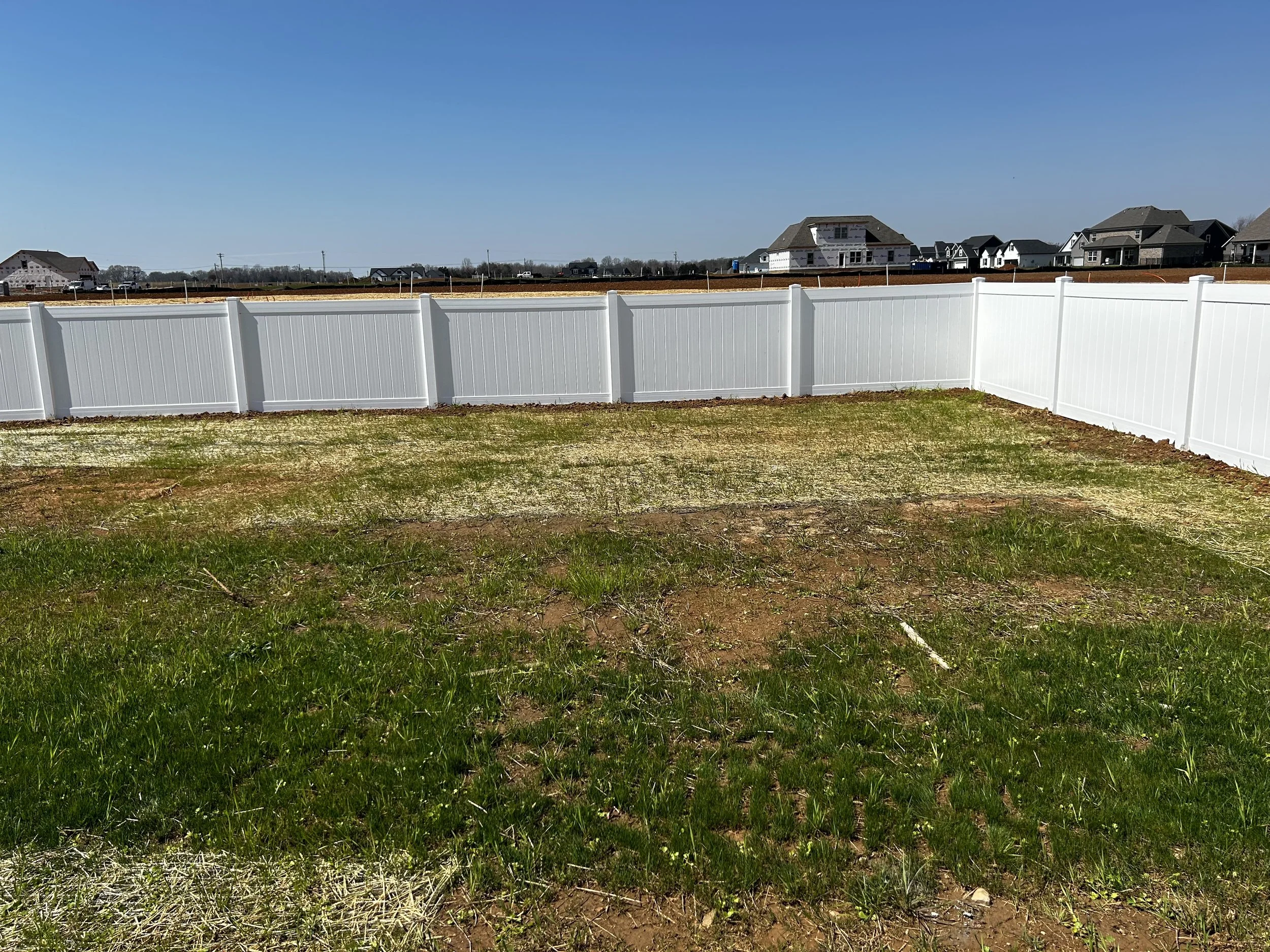
Established Middle Tennessee lawn behind a white vinyl fence

Irrigation & Sprinkler Systems in Middle Tennessee

A green lawn in August without standing there holding a hose.

Irrigation is our second core service and it pairs naturally with fencing, because both are decided when a yard is being finished. We install new sprinkler systems, expand systems that never covered the whole property, run drip to planting beds, and handle spring startups and fall winterization.

Core work

New systems and expansions

Design

Zoned by sun, slope and plant type

Seasonal

Startup and winterization

Counties

Rutherford, Williamson, Wilson, Davidson

Middle Tennessee lawns need irrigation more than people expect

We get plenty of rain here on an annual basis, but it does not arrive when the lawn needs it. July and August routinely bring multi week dry stretches with high heat, which is exactly when fescue struggles and new sod dies. An irrigation system turns that from an emergency into a schedule.

It matters even more on new construction, where topsoil is thin, grading has compacted the ground, and fresh sod or seed has no root depth to fall back on.

  • New sprinkler system installation
  • Expansion of partial or builder installed systems
  • Drip irrigation for beds, borders and foundation plantings
  • Spring startup, adjustment and fall winterization

Zoning is what separates a good system from a wasteful one

A yard is not one watering environment. The south facing front lawn dries out far faster than the shaded strip behind the house, slopes shed water before it soaks in, and planting beds want slow deep water rather than overhead spray.

We zone based on those differences, choose heads by throw distance and precipitation rate, and set the controller so each zone runs long enough to reach root depth without running off into the street.

Installed alongside fence and hardscape work

When irrigation and fencing are on the same property, sequence matters. Sleeving under a future patio, keeping mainlines clear of a fence post line, and coordinating trenching with grading all save money and prevent one trade cutting through another trade's work.

Running both under one point of contact is the simplest way to avoid that.

Water pressure decides more than yard size does

Homeowners usually assume a bigger yard simply means more zones. What actually caps a zone is available flow, measured in gallons per minute at the point of connection, and that varies widely between a Nashville street on older infrastructure and a newer Rutherford County subdivision.

Push too many heads onto one zone and every head underperforms. The lawn looks evenly mediocre rather than obviously broken, which is why undersized systems often go undiagnosed for years. Testing pressure and flow before designing is the difference between a system that works and one that merely runs.

Common questions

Answers before you ask.

How much does a sprinkler system cost?

Cost tracks the number of zones, which tracks yard size, shape and planting mix. We size the system on site and quote it clearly before any work begins.

Can you add to my existing sprinkler system?

Yes. Expanding a builder installed system that only covers the front yard is one of our most common irrigation jobs. We check the water supply and existing zone capacity before adding.

When should a system be winterized?

Before the first hard freeze, typically in late fall in Middle Tennessee. Water left in lines and backflow devices is what cracks them.

Will irrigation raise my water bill much?

It replaces hose watering, which is far less efficient, so the increase is smaller than people expect. A correctly zoned system with a seasonal schedule uses less water than a homeowner running sprinklers by hand.

Get an estimate

Ready to talk through your project?

Send the property address, what you are looking to build and a few photos of the area. We will follow up to schedule a site visit and put together a clear, detailed quote.