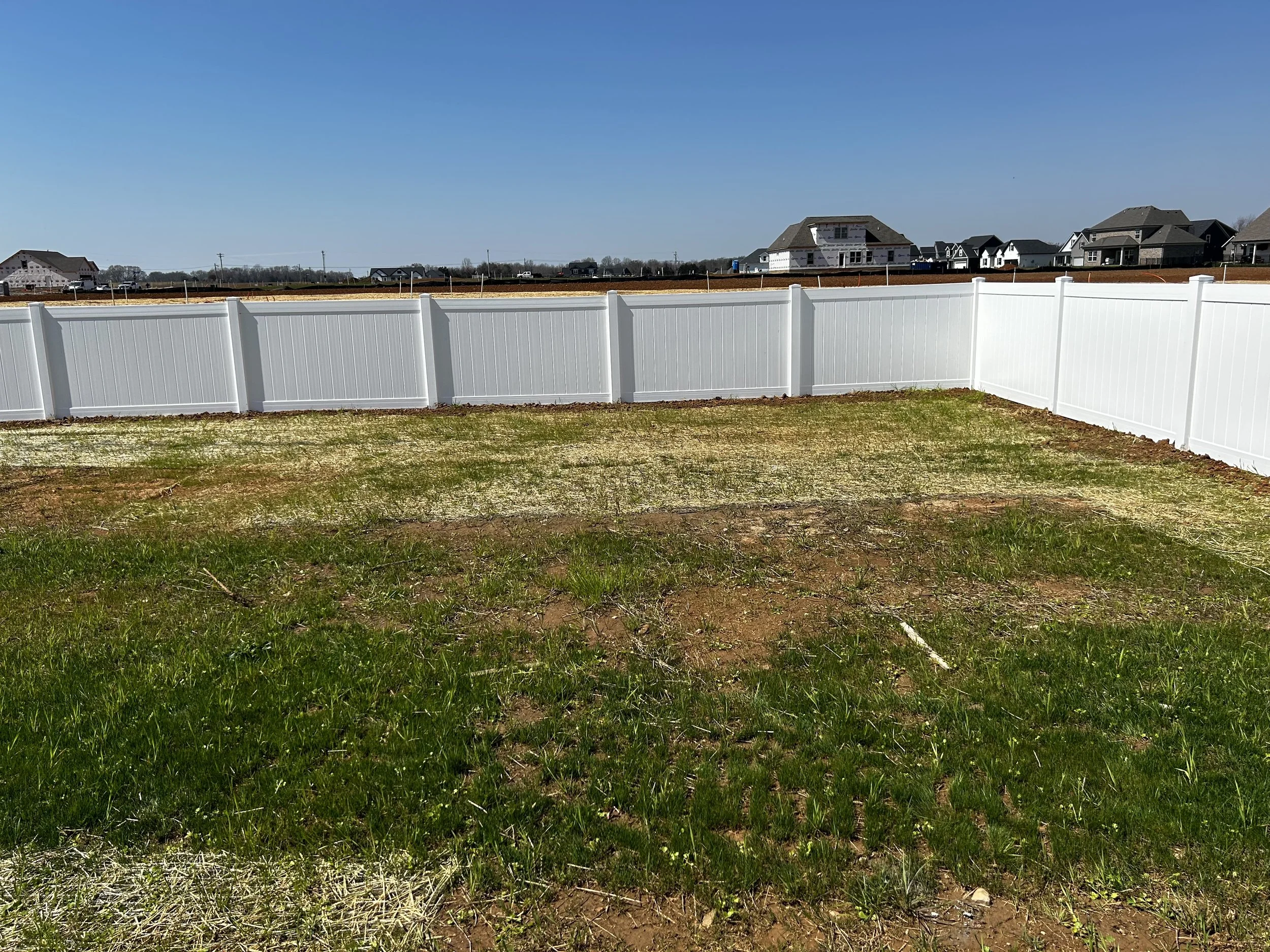
Wide Middle Tennessee lawn with established turf behind a fence line

Sprinkler System Installation in Middle Tennessee

Designed for your yard, not a template.

A new irrigation system should cover every square foot of lawn that matters, waste as little as possible on driveways and sidewalks, and be simple enough that you actually adjust it through the season. That starts with layout, not with parts.

Includes

Design, trenching, heads, controller

Zones

Sized to yard and plant type

Timeline

Most yards in one to two days

Handoff

Walkthrough of every zone

How we design the system

We measure the property, note sun exposure and slope, identify planting beds and check your available water pressure and flow. Those numbers determine how many heads can run per zone, which head types make sense, and how the zones get grouped.

Head to head coverage is the standard we aim for, meaning spray from each head reaches the next one. Skipping that is what produces the brown arcs you see in poorly designed lawns by mid July.

  • Pressure and flow tested before zones are set
  • Rotors on open turf, sprays on tight areas, drip in beds
  • Head to head coverage to avoid dry arcs
  • Backflow prevention and a clearly labeled controller

Installation without wrecking the yard

Trenching or pulling lines through an established lawn always looks worse on day one than it does two weeks later, but technique matters. We keep trench lines tight, pull pipe where the yard allows it, sleeve under hardscape rather than cutting it, and restore the surface as we go.

On new construction we prefer to install before sod, which is faster, cheaper and leaves no scars at all.

Controller setup and handoff

The best system in the world fails if the controller is set to water fifteen minutes on every zone forever. We program a starting schedule based on your zones and season, walk you through adjusting it, and run every zone with you so you can see the coverage yourself.

Smart controllers with weather based adjustment are available if you want the system to handle seasonal changes on its own.

What we do about compacted new construction soil

On a new build, the ground under your sod was driven over by heavy equipment for months. Water hits it and runs off rather than soaking in, so a single long watering cycle mostly waters the street.

The fix is in the schedule rather than the hardware. Cycle and soak programming runs a zone in shorter bursts with rest between them, letting each application absorb before the next. We set that up at handoff and show you how to adjust it as the lawn establishes and roots deepen.

Common questions

Answers before you ask.

How many zones will my yard need?

Zone count comes from usable water flow and yard size. A typical suburban lot often lands in the range of four to eight zones, and larger properties go well beyond that. We calculate it from your actual pressure and flow.

Do you install irrigation on new construction?

Yes, and that is the ideal time. Installing before sod or seed is cheaper, faster and leaves no trench lines in an established lawn.

Does a sprinkler system need a backflow preventer?

Yes. Protecting the potable water supply is required, and the device also needs to be drained before hard freezes.

How long does installation take?

Most residential yards are a one to two day job once the design is set and utilities are located. Larger properties with high zone counts take longer.

Get an estimate

Ready to talk through your project?

Send the property address, what you are looking to build and a few photos of the area. We will follow up to schedule a site visit and put together a clear, detailed quote.